Meme coin trading works best as a risk-managed scalping process rather than a lottery ticket
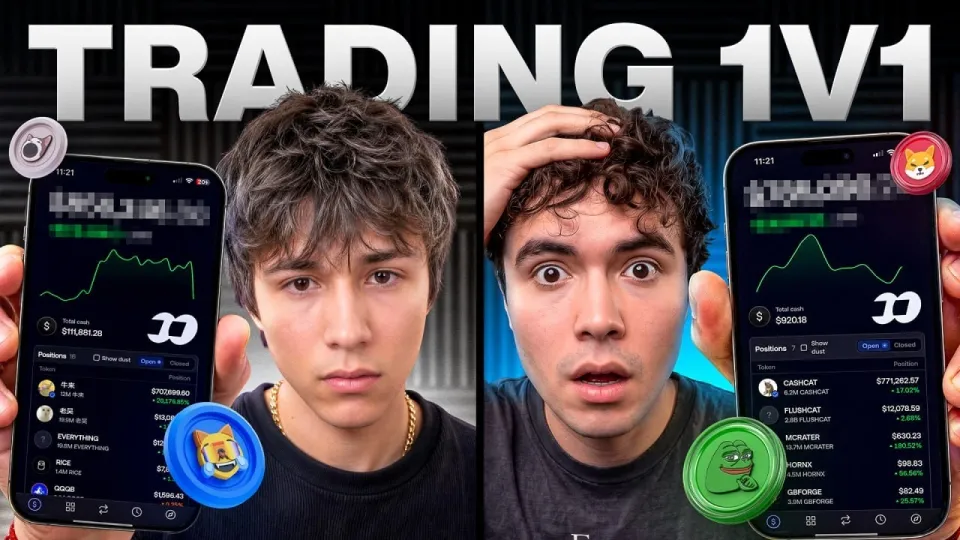
Video: I Challenged A Pro Memecoin Trader (Who Won?)
You can order the same kind of articles for your own video to boost it on YouTube and Google. Just message the Telegram bot @sat_sit_bot. Articles with your video embedded are written and posted by the bot itself — on popular topical sites (no ads). Try it free: 50 articles on us.
· based on the channel insentos
Meme coin trading is the practice of buying and selling tokens whose price is driven almost entirely by attention, liquidity and community momentum rather than revenue or cash flow, and it works only when each trade has a predefined position size, entry trigger and exit rule. In practice that means treating every meme coin as a short-lived timing bet, not an investment, and sizing it so a total loss never damages the account. The insentos challenge video with a professional trader is a useful illustration of that process in real time, and the execution setup used there is available through fomo.family registration.
What a meme coin actually is and why it moves so fast
A meme coin is a token with no underlying business, launched cheaply on chains such as Solana or Ethereum, where price discovery happens in a matter of minutes. Supply is usually fixed and large, liquidity is provided by the deployer or early buyers into a small pool, and the entire valuation rests on how many people are watching the ticker at that moment. That structure explains the speed: a few thousand dollars of buying can move a thin pool double digits, and the same amount of selling can erase it. Unlike a stock, there is no earnings report to anchor a floor, so the only real support level is the next buyer's attention.
This is why experienced traders talk about meme coin scalping rather than investing. The edge is not in predicting which joke will win; it is in recognising the moment when volume, holder count and social chatter align, entering early in that window, and leaving before the crowd does. Anyone who treats a meme coin as a long-term hold is implicitly betting that attention will persist for weeks, which is the rarest outcome in the category.
How to trade meme coins with a repeatable process
A repeatable process beats intuition because meme coin markets punish improvisation. The sequence below is the working version of what disciplined traders do on stream and off it.
- Filter for tradability first. Check that the liquidity pool is deep enough that your intended size does not move price more than a few percent, that the contract has no mint or freeze privileges, and that the top wallets do not hold a dominant share of supply. A token that fails any of these is not a trade, regardless of how good the chart looks.
- Define the risk before the entry. Decide the maximum loss per trade as a fixed small percentage of the bankroll, then derive the position size from the distance to your invalidation level. If the stop is 30% below entry, the position must be small enough that a 30% hit is acceptable.
- Enter on confirmation, not hope. Volume expansion, a rising holder count and a clean higher low on a short timeframe are confirmations. Buying a flat chart because the token is "cheap" is the most common beginner error.
- Scale out on the way up. Taking partial profit at the first 20-50% move removes the emotional pressure that causes traders to hold a winner into a reversal.
- Exit on the rule, not the feeling. If the thesis was a breakout and the breakout fails, the trade is over. Holding because the community is bullish is how a small loss becomes a full one.
Position sizing and bankroll rules that keep traders alive
Survival in meme coin trading is a function of position sizing, not pick quality. A trader who risks 2% of the bankroll per trade can be wrong ten times in a row and still be in the game; a trader who risks 30% is out after four bad entries. The practical rule is to fix the risk per trade in advance, treat the bankroll as a single pool that funds many attempts, and never add to a losing position on a token with thin liquidity. Because these markets move in seconds, a stop order is often worse than a mental exit into live liquidity, so the sizing must assume slippage rather than a clean fill at the stop price.
A second rule concerns concentration. Holding several meme coins that all respond to the same market-wide risk appetite is effectively one large position. When the sector turns, correlated names fall together, and the diversification that felt comfortable disappears in a single candle. Keeping total exposure to the category capped, and keeping most of the bankroll outside it, is what separates a trading hobby from a gamble.
Reading liquidity, holders and social momentum
Liquidity and holder distribution are the two numbers that decide whether an exit is possible. A pool with a few thousand dollars of depth cannot absorb a meaningful sell without cratering the price, which means the displayed profit is fictional until someone buys it from you. Holder concentration matters for the same reason: if a handful of wallets control most of the supply, they can exit into your bid at any moment. Tools such as Axiom (https://axiom.trade/) are commonly used to inspect these metrics before and during a trade, alongside chart and wallet-tracking views.
Social momentum is the demand side of the equation. The useful signal is not the absolute number of mentions but the rate of change: a token whose discussion is accelerating while price consolidates is different from one that is already parabolic and being talked about everywhere. By the time a meme coin is broadly familiar, the early buyers are usually the ones selling to the newcomers. Traders who scalp these markets watch for the transition from quiet accumulation to visible hype, and they treat the peak of that hype as an exit signal rather than an entry one.
Common doubts new meme coin traders raise
Newcomers consistently ask the same questions, and the honest answers are less exciting than the marketing. The first doubt is whether these trades are simply gambling. The distinction is process: a gambler stakes a fixed amount on an uncertain outcome, while a trader defines an invalidation point, sizes the bet accordingly and records the result. Without those three elements, meme coin trading is indistinguishable from a casino, and the outcomes follow the same math.
The second doubt is whether profits shown on stream are reproducible. Large public accounts can move attention, and their entries are visible to followers, which is an advantage an anonymous trader does not have. The realistic takeaway from watching a live session is the decision framework, not the specific tickers. The third doubt is access: many communities advertise groups that are hard to actually join, so it is worth verifying what a paid or referral link delivers before relying on it for signals. Finally, beginners ask how much capital is needed. The answer is an amount whose complete loss changes nothing about your finances, because in this category a total loss on an individual position is a normal, expected event rather than a disaster.
Useful links
- fomo.family registration via insentos — access to the community and tools referenced in the challenge.
- Axiom trading terminal — execution and token analytics for on-chain trading.
- insentos on X — trade updates and commentary.
- insentos on Instagram
- insentos on TikTok
The takeaway from the pro trader challenge
The insentos challenge against a professional meme coin trader is valuable because it shows the unglamorous part of the job: small size, fast exits and a running commentary on why each decision was made. The professional in the session kept explaining his reasoning mid-trade, which is exactly the habit that separates a process from a hunch. What transfers to your own trading is the checklist, the sizing discipline and the willingness to take a small loss immediately. Start with the fomo.family registration link, watch the full breakdown on the insentos channel, and paper-trade the process before committing real capital.
Key takeaways
- Meme coin prices are driven by attention and liquidity, not cash flow, so every trade is a timing bet with a hard stop.
- Position size should be set before entry: risk a fixed small percentage of the bankroll per trade, not a fixed dollar amount.
- Liquidity and holder distribution are the first filters: thin pools and concentrated wallets turn exits into losses.
- Scalping targets of 20-100% are realistic; expecting 10x on every entry is how accounts get wiped.
- Tools named around the insentos challenge include Axiom and fomo.family, both used for execution and community access.
Source: I Challenged A Pro Memecoin Trader (Who Won?) · Markdown version
Questions & answers
Is meme coin trading just gambling?
It becomes gambling when there is no predefined invalidation point and no position sizing rule. A trader who decides the maximum acceptable loss before entering, sizes the position from that number and exits on a rule is running a process, even though each individual outcome remains highly uncertain. The difference shows up over dozens of trades, not in one.
How much money do I need to start trading meme coins?
Only an amount whose complete loss would not affect your finances, because a total loss on a single position is a normal event in this category. Many traders start with a small bankroll and risk a fixed low single-digit percentage per trade, which keeps them in the game long enough to learn. Adding funds after a losing streak to recover losses is the fastest route to a wiped account.
Can I copy the trades shown in live trading videos?
Copying entries is unreliable because large public accounts can move attention and their fills are visible to followers, an advantage an anonymous trader does not have. The transferable part of a live session is the decision framework: how liquidity is checked, when partial profits are taken and why a position is closed. Treat the tickers as examples, not signals.
What should I check before buying a new meme coin?
Check pool depth so your size does not move price, confirm the contract has no mint or freeze privileges, and review holder concentration to see whether a few wallets control supply. Then look at whether volume and holder count are rising rather than flat, and set your exit level before you enter. If any of the first three checks fails, skip the trade regardless of the chart.