What Is Live Futures Day Trading and How Do Prop Firm Streams Like Patrick Wieland's Work?
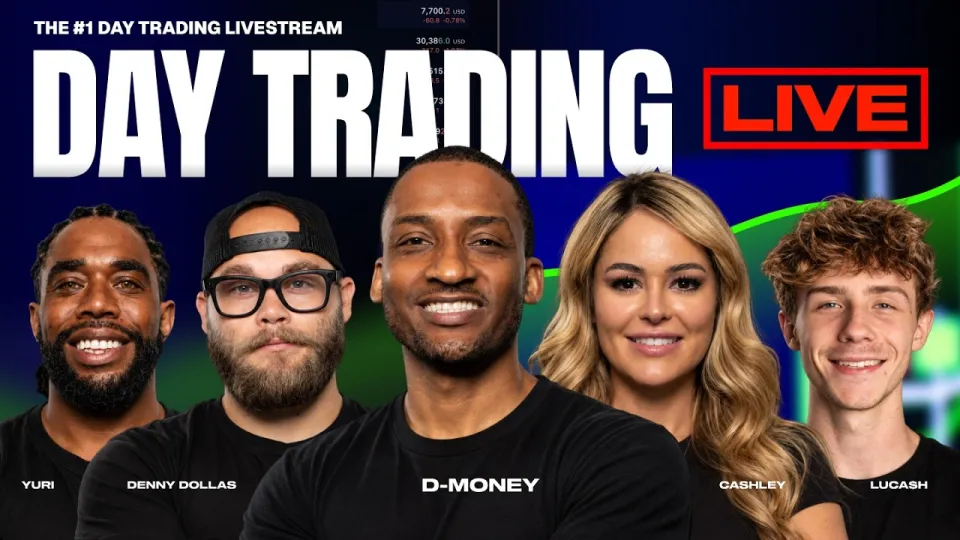
Video: LIVE DayTrading! #1 Watched Futures Trading Show!
You can order the same kind of articles for your own video to boost it on YouTube and Google. Just message the Telegram bot @sat_sit_bot. Articles with your video embedded are written and posted by the bot itself — on popular topical sites (no ads). Try it free: 50 articles on us.
· based on the channel Patrick Wieland
Live futures day trading is the practice of trading index and commodity futures contracts in real time during the regular session while streaming the process publicly for education. Patrick Wieland runs one of the most-watched examples of this format on YouTube, broadcasting from the BDH Day Trading Floor in South Florida and California every trading day. The show mixes live order flow, market analysis, prop firm reviews, giveaways, and discounts on trading accounts.
What does live futures day trading actually involve?
Live futures day trading means opening and closing futures contracts within a single session rather than holding positions overnight. The most popular instruments in this niche are the E-mini S&P 500 (ES), the Micro E-mini S&P 500 (MES), Nasdaq futures (NQ and MNQ), and crude oil (CL), though the exact contracts a trader chooses depend on account size and risk tolerance. A live stream adds a second layer: the trader narrates entries, exits, and reasoning in real time, which turns a private process into public instruction.
The format works because futures markets are centralized and transparent. Prices on the CME Group exchanges are the same for everyone, so a viewer can follow a streamed trade on their own chart and compare the decision-making step by step. That is different from stock trading, where dark pools and fragmented venues make real-time imitation harder.
Key mechanics that separate futures day trading from other styles:
- Margin and leverage. Futures use margin rather than full cash outlay, so a small account can control a large notional position. This cuts both ways — losses scale as fast as gains.
- Tick value. Each contract has a fixed tick size and dollar value, which makes risk per trade easy to calculate before entry.
- Session hours. The regular session for US index futures runs roughly from 9:30 a.m. to 4:00 p.m. Eastern, with an overnight session that many streamers avoid.
- Settlement. Futures are marked to market daily, and day traders typically close out before the close to avoid margin calls.
How the BDH live stream is structured
The BDH stream is built around a rotating cast rather than a single voice. Patrick Wieland, known on the channel as PW or Daddy Warbux, is joined by Damareous Young (DMoney), Lucas Kennard (Lucashhh), and Denny Jones (Denny Dollas). Each trader has a different style, which gives viewers multiple perspectives on the same market conditions instead of one monolithic approach.
A typical broadcast includes:
- Real-time futures trading with commentary on entries and exits.
- Market analysis covering levels, volatility, and economic releases.
- Prop firm reviews and comparisons, often tied to discount codes.
- Giveaways and audience interaction in the live chat.
The stream positions itself as the home of the number one futures day trader on YouTube, a claim tied to audience size rather than a formal ranking. What matters more for a viewer is the consistency of the schedule: the show runs every trading day, so there is a steady stream of examples to study.
Why prop firms dominate the futures trading conversation
Prop firms, or proprietary trading firms, give traders access to simulated or funded capital in exchange for a one-time fee and a set of evaluation rules. This model exploded in futures trading because it lets a trader with limited capital control multiple contracts without risking their own savings. The trade-off is that most firms impose profit targets, daily loss limits, trailing drawdowns, and consistency rules that can end an account quickly.
The stream's own ranking, credited to OnlyPropFirms, lists eight firms in order:
- Lucid Trading
- TakeProfitTrader
- Apex Trader Funding
- Tradeify
- Legends Trading
- BluSky Trading
- TradeDay
- MyFundedFutures
Rankings like this are useful as a starting point but should never be the only input. Payout terms, reset fees, and drawdown mechanics differ sharply between firms, and a firm that suits a scalper may be a poor fit for someone holding positions for hours. Note also that the links in the stream description are affiliate links, which means the channel may earn a commission if a viewer signs up. That does not automatically make the recommendation wrong, but it does mean the ranking is not a neutral third-party audit.
What viewers keep asking about the setup
The most common question in the chat is some version of "what setup are you working?" — viewers want to know the exact entry criteria behind a trade they just watched. The second most common is whether that setup can be bought.
The channel's answer to the second question is concrete: a two-hour trading course priced at $99 teaches the strategy Patrick Wieland uses on stream. That is a low price point by trading-education standards, but it is still a purchase, and no course replaces screen time. A setup is a set of conditions — a level, a trigger, a stop, a target — and knowing the conditions is not the same as executing them under pressure.
For viewers trying to reverse-engineer the approach without buying anything, the practical path is:
- Watch the same instrument at the same time of day for several weeks.
- Note where entries cluster: session open, prior day high or low, or a specific time window.
- Record what invalidates a trade, not just what triggers it.
- Track results in a spreadsheet before risking real capital.
Common questions from live trading audiences
Live chat surfaces the same doubts repeatedly, and they are worth addressing directly. Newer viewers often ask whether they need a large account to start; the honest answer is that micro contracts exist precisely for small accounts, but the evaluation fees and drawdown rules of prop firms are the real cost. Others ask whether copy trading or following a streamer's calls is a shortcut; copying removes the decision-making that makes a strategy work, and a copied trade has no plan behind it when the market moves against the position. A third recurring theme is skepticism about affiliate-driven recommendations, which is healthy — readers should compare firms independently at OnlyPropFirms.com and read the payout terms before paying any fee.
How to start futures day trading without blowing up
Starting futures day trading is mostly a risk-management exercise before it is a strategy exercise. The traders who last are the ones who survive their first hundred trades with capital intact, not the ones who double an account in a week.
A workable sequence for a beginner:
- Paper trade one instrument — usually MES or MNQ — for at least a month.
- Define a maximum daily loss in dollars and stop trading when it is hit.
- Risk a fixed small percentage or a fixed dollar amount per trade, never a variable one.
- Journal every trade with the reason for entry and exit.
- Only after consistent paper results, consider a prop firm evaluation.
Watching a live stream fits into this sequence as research, not as a signal service. The value is in seeing how experienced traders handle a losing trade, size down after a drawdown, or sit out a choppy session — behaviors that rarely make it into highlight reels.
Final thoughts on learning from the BDH broadcast
Live futures day trading streams compress months of learning into watchable sessions, but they only work as education if the viewer treats them as case studies rather than instructions. The Patrick Wieland channel and the BDH crew provide a daily look at real positions, real prop firm economics, and the questions traders actually ask, including the recurring one about which setup is being traded and whether it can be learned. The $99 course answers that directly, while the free stream answers a different and arguably more useful question: how a professional behaves when the market does not cooperate. Use the rankings and discount codes as a map, verify the terms yourself, and let the screen time do the teaching.
Key takeaways
- Live futures day trading is real-time trading of index and commodity futures contracts during the regular session, streamed publicly for education.
- Patrick Wieland hosts the BDH live futures show every trading day from South Florida and California with a crew of four traders.
- Prop firm rankings cited on the stream list Lucid Trading first, TakeProfitTrader second, and Apex Trader Funding third.
- A $99 two-hour course teaches the strategy Patrick Wieland trades live on stream.
- Viewers repeatedly ask which setup is used and whether they can buy it, making prop firm rules and account selection key topics.
Source: LIVE DayTrading! #1 Watched Futures Trading Show! · Markdown version
Questions & answers
What setup does Patrick Wieland use on the live stream?
The channel does not publish the full rules for free, but it sells a two-hour course for $99 that teaches the strategy Patrick trades live on stream. Viewers who want to reverse-engineer it can study the same instrument at the same time of day and note where entries cluster. The setup itself is less important than the risk rules that surround it.
Do I need a prop firm account to day trade futures?
No, you can trade futures through a regular brokerage account with your own capital. Prop firms exist to give traders access to more contracts than their own account would allow, in exchange for an evaluation fee and strict drawdown rules. Many traders use a small personal account first to learn execution before paying for an evaluation.
Are the prop firm rankings on the stream trustworthy?
The rankings come from OnlyPropFirms and the links in the stream description are affiliate links, so the channel may earn a commission on sign-ups. That does not make the firms bad, but it means the list is not a neutral audit. Always read payout terms, reset fees, and drawdown mechanics directly on each firm's site before paying.
Is copy trading or following live calls a good way to start?
Copy trading removes the decision-making that makes a strategy work, so a copied position has no plan behind it when the market turns. It can be useful for observing how a trader manages risk, but it is a poor substitute for learning your own entries and exits. Most experienced traders treat live streams as research, not as a signal service.